The Best Books on Documentation, Information Design, and Visual Communication—and Why They Matter for Business
- Peter, Instrux Studio
- Apr 25
- 3 min read
In any organization, operating manuals, installation guides, and technical documentation are often treated as secondary deliverables—something produced at the end of a project. In reality, they are mission-critical tools that directly impact efficiency, safety, and customer experience. The difference between a confusing manual and a clear, well-illustrated one can mean fewer errors, faster onboarding, and significantly reduced support costs.
Several foundational books and thought leaders help define what “good” documentation looks like. Here are five of the most important.

1. The Visual Display of Quantitative Information – Edward Tufte
Edward Tufte is widely considered the authority on information design. His work focuses on how complex information can be presented with clarity and precision.
This book is essential because it introduces the idea of data-ink ratio—removing unnecessary visual noise to highlight what truly matters. For technical illustrators and documentation teams, this translates directly into cleaner diagrams, better hierarchy, and more effective communication.
For businesses, Tufte’s principles reduce misinterpretation. In manuals, that means fewer mistakes and faster comprehension.

2. Envisioning Information – Edward Tufte
A companion to his earlier work, this book focuses more specifically on visualizing complexity—exactly what technical documentation requires.
Tufte explores layering, color use, and visual structure to guide users through dense information. For anyone designing installation guides or operational manuals, this is a masterclass in making the complex feel intuitive.
Its relevance lies in transforming manuals from static instructions into usable visual systems.

3. The Design of Everyday Things – Don Norman
Don Norman, a pioneer in user experience (UX), reframes how we think about usability. His core argument is simple but powerful:
When users make mistakes, it’s often the design—not the user—that’s at fault.
For documentation teams, this is a critical mindset shift. Poorly written or illustrated manuals create friction, confusion, and errors. Well-designed ones guide users effortlessly.
This book is particularly valuable for technical writers and illustrators because it emphasizes:
Mental models
Feedback systems
Affordances (how things should be used)
All of which are essential in instructional materials.
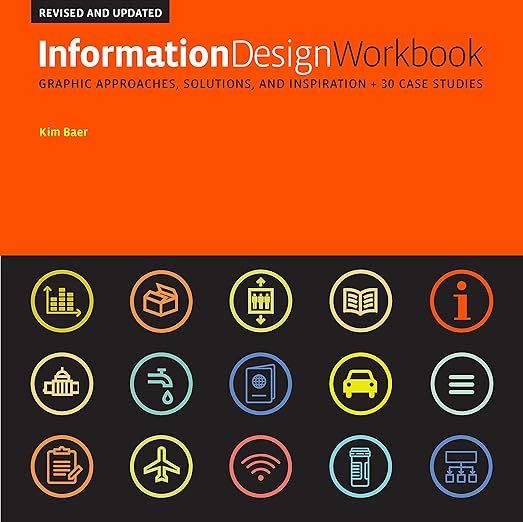
4. Information Design Workbook – Kim Baer
Kim Baer brings a more practical, applied perspective to information design. Her workbook-style approach breaks down how to structure and present information across different formats, including instructional materials.
This book is especially useful for teams working collaboratively—writers, designers, and illustrators—because it provides real-world frameworks for organizing content.
For businesses, it bridges the gap between theory and execution, helping teams create documentation that is not only clear but also consistent and scalable.
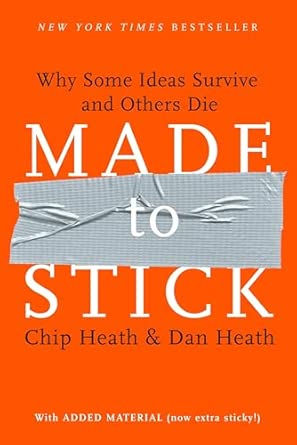
5. Made to Stick – Chip Heath & Dan Heath
While not strictly about technical documentation, this book is highly relevant. The Heath brothers explore why some ideas are memorable and others are forgotten.
Their SUCCESs framework (Simple, Unexpected, Concrete, Credible, Emotional, Stories) applies directly to instructional content. Manuals that are:
Simple
Concrete
Structured
are far more effective than dense, abstract text.
For illustrators and writers, this reinforces the importance of clarity, brevity, and visual reinforcement.
Why This Matters for Businesses
Investing in high-quality documentation is not just about aesthetics—it’s about performance.
Well-designed manuals:
Reduce training time
Minimize user error
Lower customer support costs
Improve product adoption
Enhance brand perception
In industries like manufacturing, healthcare, and logistics, the stakes are even higher. Poor documentation can lead to safety risks, operational delays, and costly mistakes.
Final Takeaway
These books collectively reinforce a powerful idea: clarity is a competitive advantage.
For anyone involved in the technical documentation workflow—whether a writer, designer, or illustrator—they provide both the theoretical foundation and practical tools to create materials that truly work.
In the end, great documentation doesn’t just explain a product—it enables it to succeed.


Comments